
Three Years Later: A Beaver Success Story at Trentham
As we move into lighter evenings and beaver sightings become more frequent, we thought this would be a great time to share with you all our exciting beaver-related news from this winter’s surveying activity by our ranger team and wildlife volunteers.
On 27 March 2026 will be the third anniversary of the reintroduction of Eurasian beavers to Staffordshire, with the arrival of a family of three, mum, dad and a year-old female kit, making their new home at Trentham. As you walk around Trentham Lake, you can really start to see the significant beneficial impact of their conservation grazing and engineering activities around the wetland habitat at the heart of Trentham.
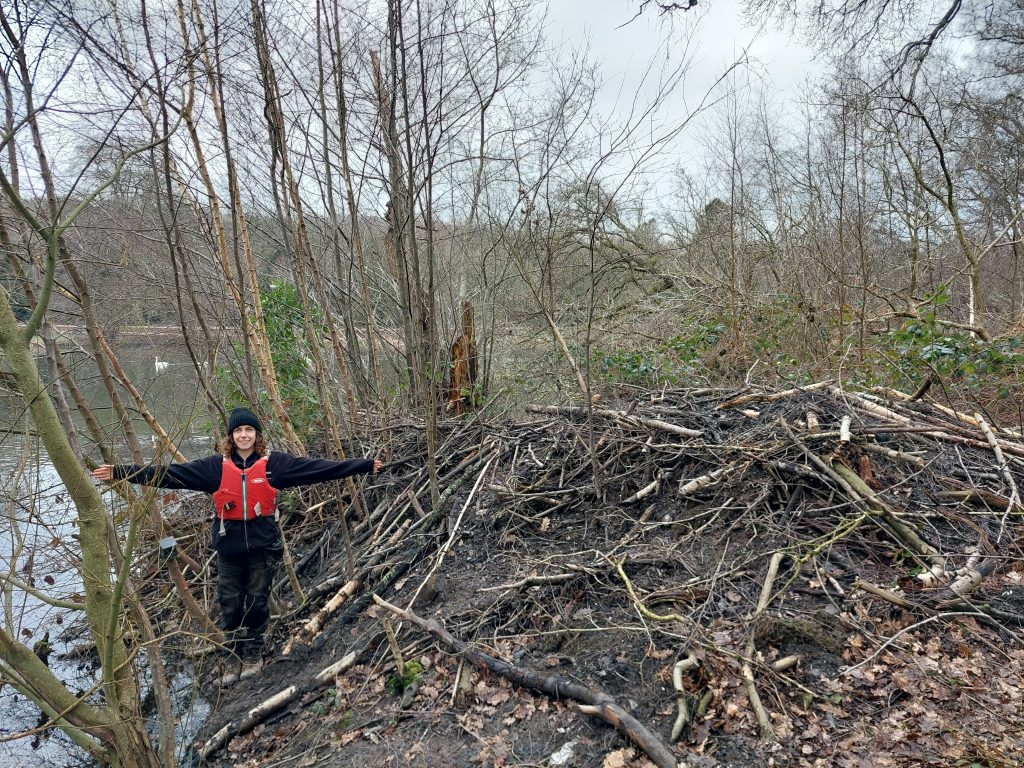
The family quickly settled, rearing 2 kits in 2023, and we can now confirm 4 kits in 2024. As enclosed wild animals, we keep our direct management and intervention to a minimum. Monitoring the beavers’ activity through direct observation, field signs and remote camera traps is ideal. It’s always exciting to see how they adapt to their habitat. Over the past three years, they have constructed two large lodges on the 17th century manmade island, now known as ‘Beaver Island’ by Trentham staff. One of these lodges is the main family home and will have several chambers.
Nearby, in the lake, you will observe the remains of their winter food cache, which was used during icy periods in the winter. Also look out for their recently engineered dam on the west side of the lake at Spring Valley, which can be accessed by the Boardwalk for great accessible views.
Thanks to wildlife photographers accessing platinum memberships, there have been amazing early morning and evening sightings of the beaver family out and about on the lake and islands, feeding and grooming. We are keeping our fingers crossed for good viewing conditions again this year for our Dawn Chorus early opening. Over the last 2 years, we have had successful sightings of the beavers just before they head off to bed to sleep during the day.
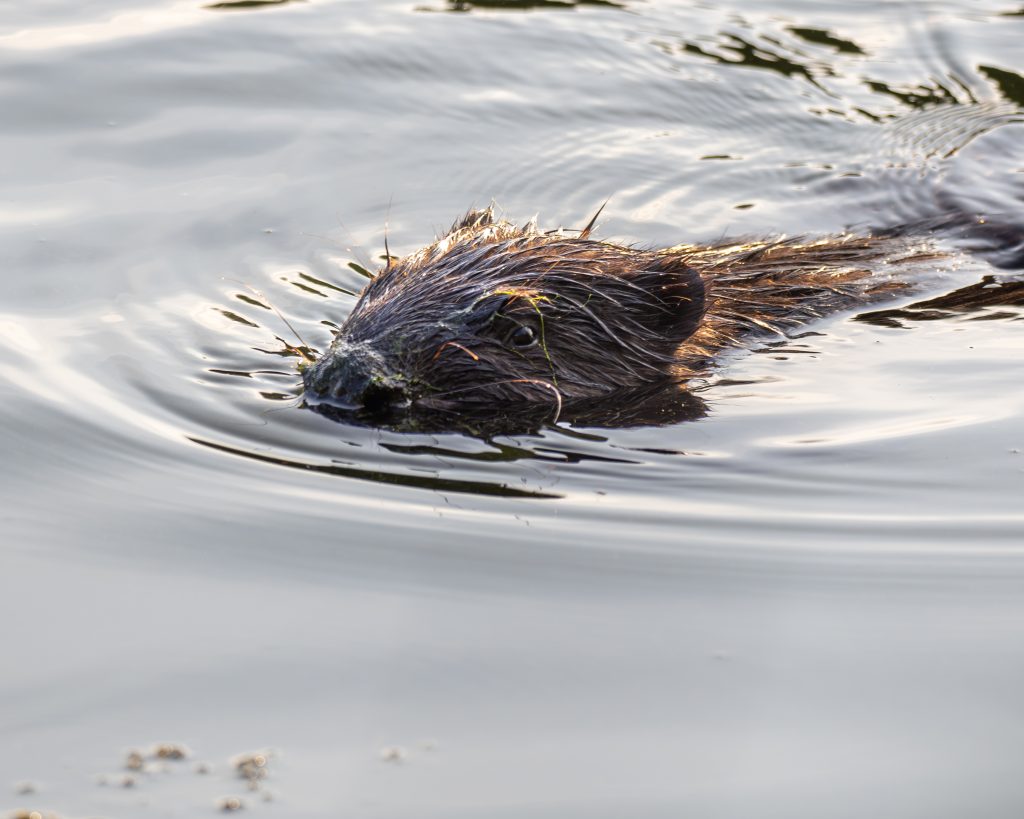
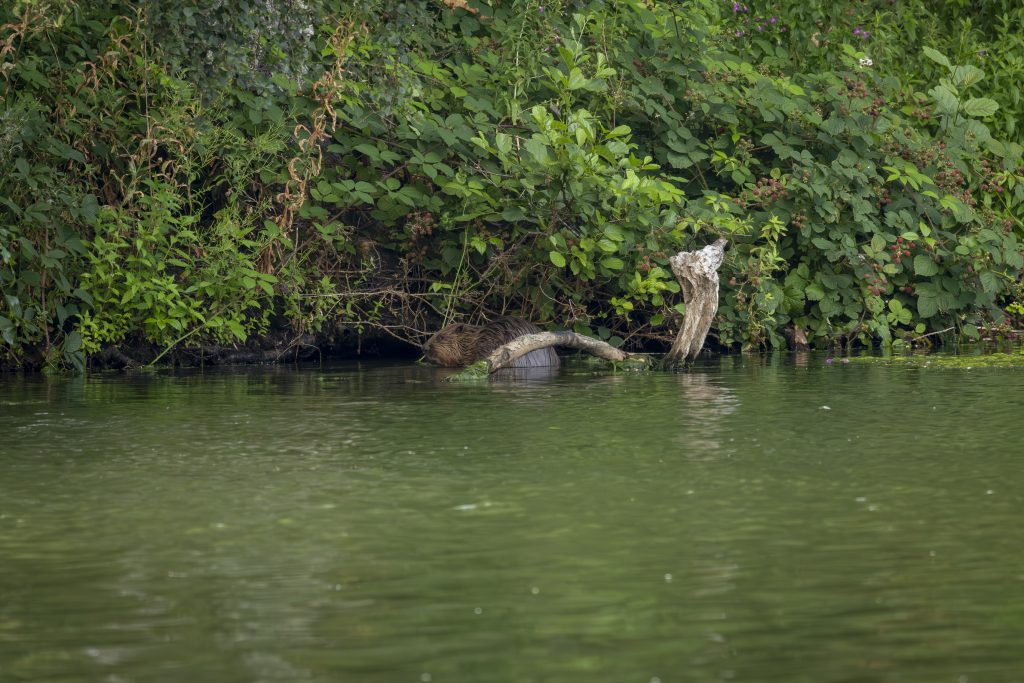
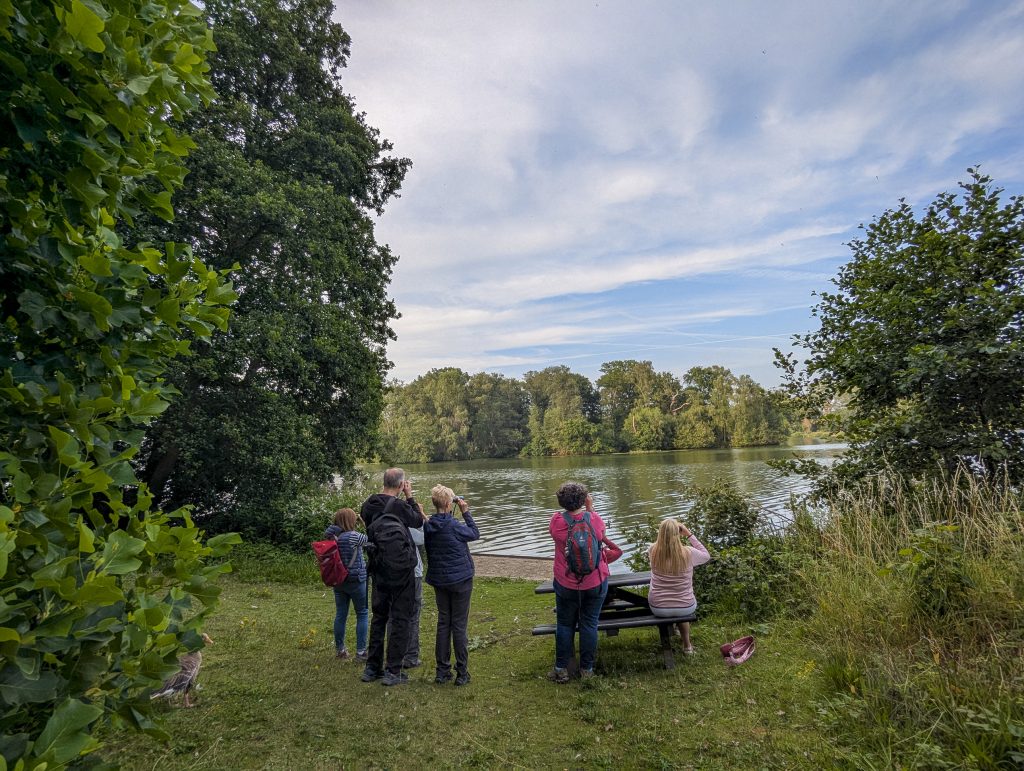
Last year was very popular with our safari tours, with Kristina Blank joining the ranger team. Our rangers love sharing footage from our camera traps and taking visitors around the lake on our electric bus to prime locations to see feeding and building activities. They also support guests in learning how to track and observe beavers, with beavers making appearances on the majority of evenings, along with great views of many of our other resident and summer migratory bird species. We have added additional safari dates to this year’s available evenings, and these are booking up quickly!
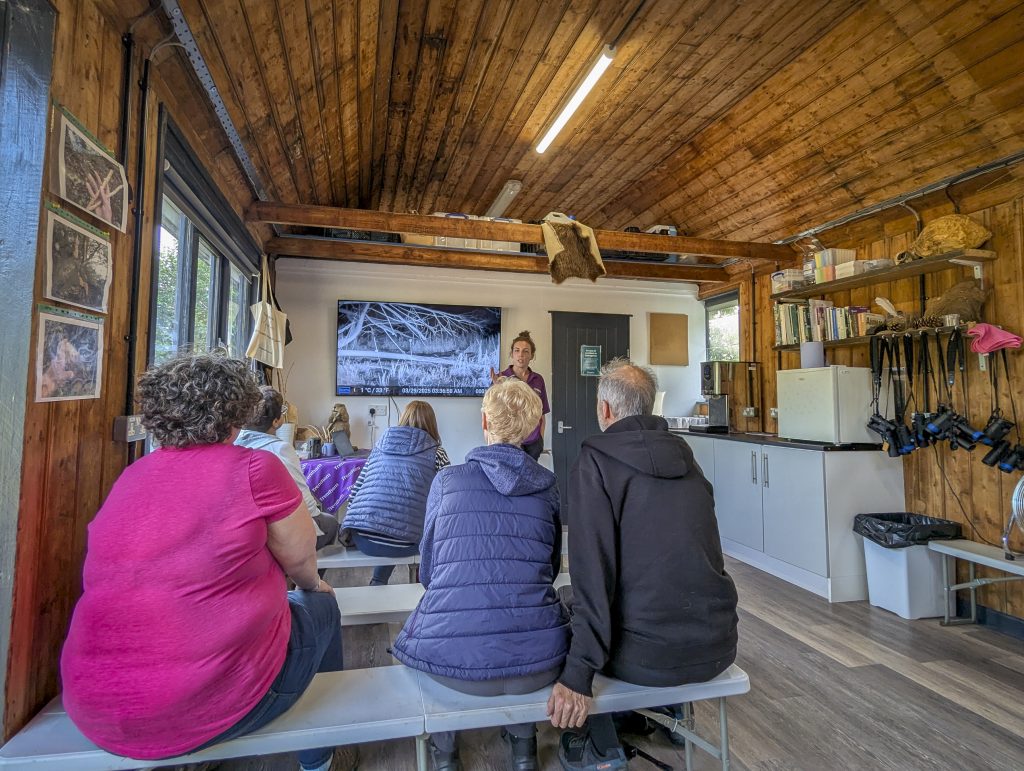
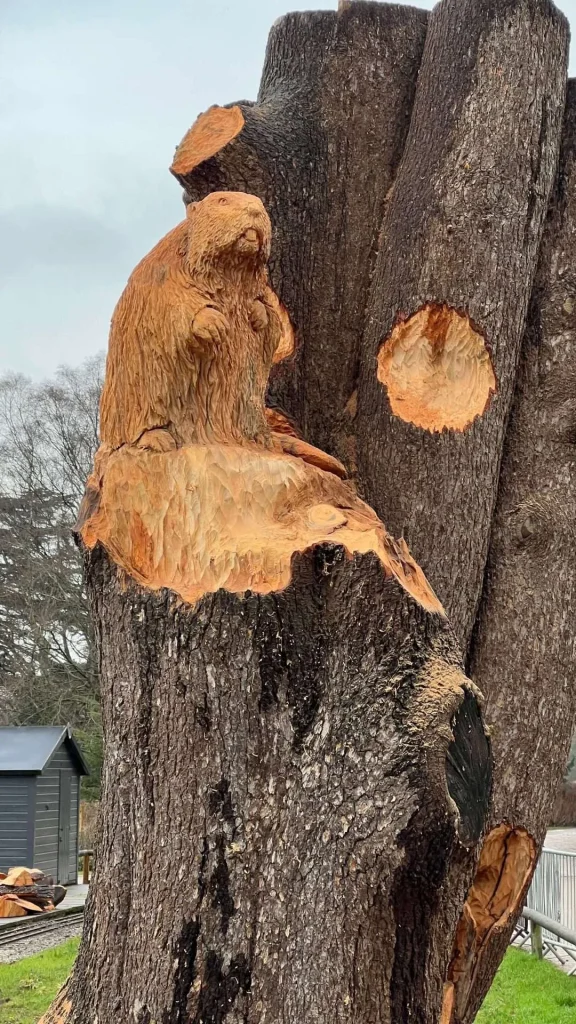
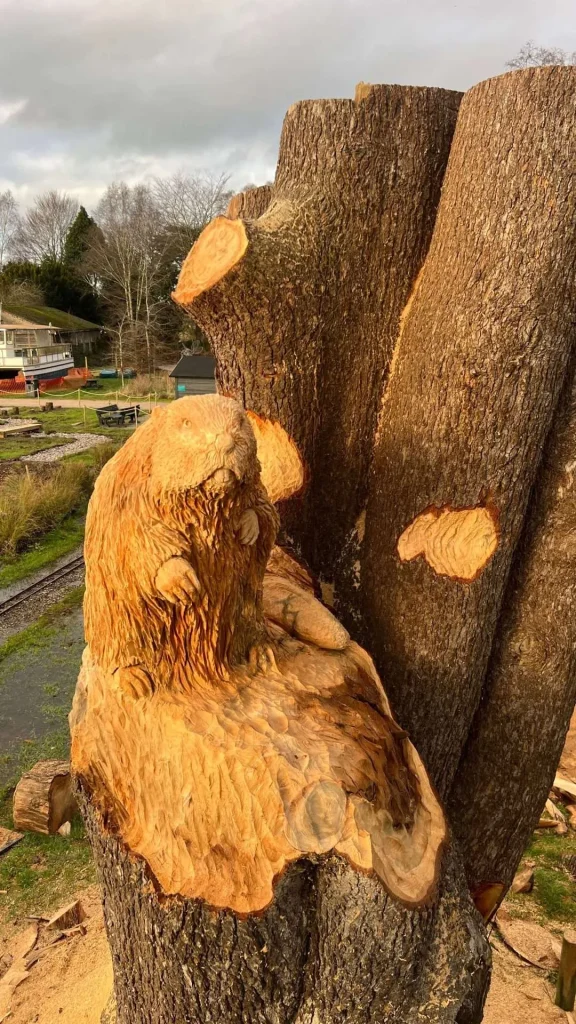
You will also see that the team have been very busy over the winter developing a Beaver Garden around North Jetty. Wrapped around our Ranger Station and Educational Tipi, there is lots for school groups and visitors to discover, including a new beaver wood carving sculpture, pond dipping pools, a model dam and lodge, a minibeast area, meadows and play activities. We are excited to add lots of creative interpretative signage developed by our rangers and marketing team too.
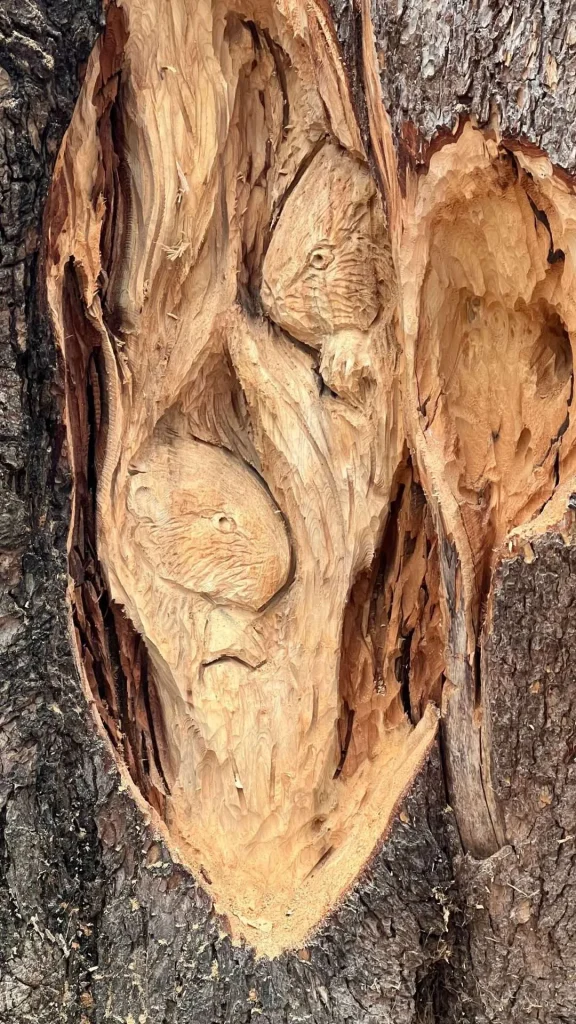
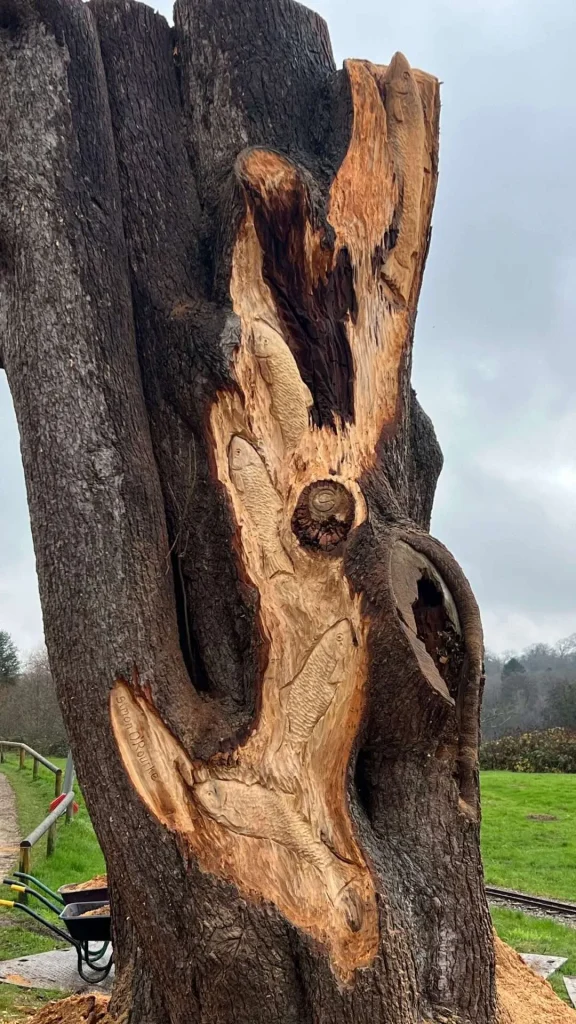
This has been a challenging build over the wet winter months with our newly formed team of wildlife volunteers and garden volunteers, who enjoy getting hands-on with nature-based projects, developing skills, improving habitats and enjoying the benefits of volunteering. Whether you are looking to gain work experience or are passionate about wildlife and want to learn new skills, our team can advise on sessions that you may want to participate in. Your first step is to fill in a volunteer application form, and then our rangers will be in contact to invite you to the site.
Visitors over the winter months will have also possibly spotted the deployment of humane beaver traps, used to temporarily capture our beaver family to determine gender and implant microchips for future identification, combined with a health check. Beavers are social animals living in extended family groups; grooming, raising kits, playing and socialising all help to maintain their familial bond. Unfortunately, in May 2025, our dominant female passed away from natural causes. With the loss of the matriarch in an enclosed population, there was potential for conflict and undesirable breeding within the family. In response to this change within the family dynamics, the Trentham team worked closely with the Beaver Trust to re-establish stability in the family group. This involved identifying and assessing all our resident beavers. The aim was to establish if the adult female would be suitable for translocation now she is of breeding age.
Following training from Dr Roisin Campbell-Palmer, Head of Restoration at the Beaver Trust, and with her team’s support throughout, our team were excited to be getting the opportunity to learn more about our beaver family.
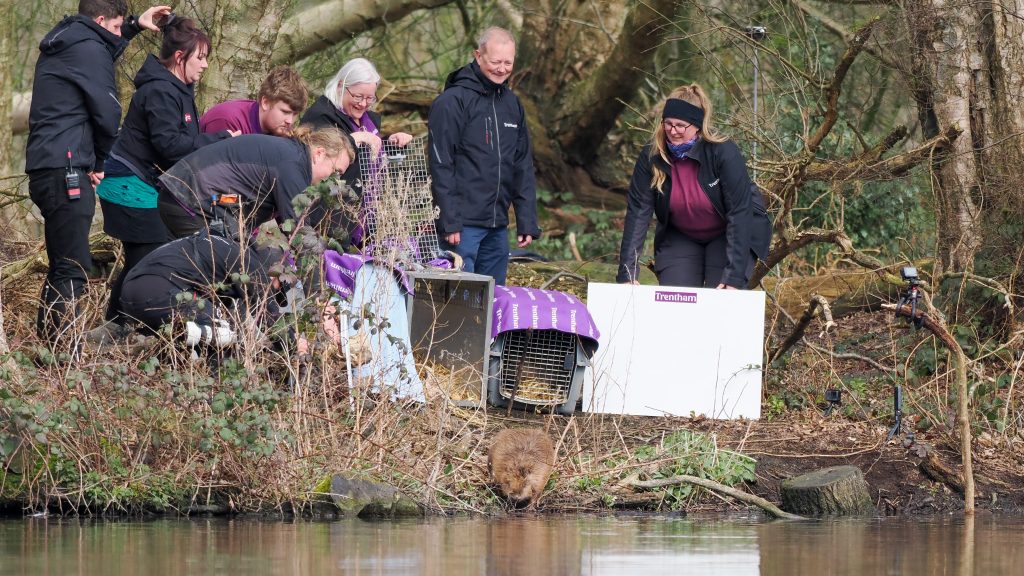
The project started in September. Three Bavarian beaver traps were placed around the lake in areas where the beavers had been active. To make the beavers comfortable and familiar with the traps, initially all the doors were removed, and beaver bait (carrots, apples and sweet potatoes) was scattered in and around the traps. Within the first couple of days, a beaver was spotted on camera investigating the trap and bait. After this initial interest, the beavers were too busy feasting on naturally occurring foods on site to be interested in our offerings in the traps. But once we had a few decent frosts, the available sugars in lakeside brambles and trees became less attractive than our juicy offerings, and our patience paid off on 26 October, with the team getting their first early hours alarm call – a beaver was finally in a trap!
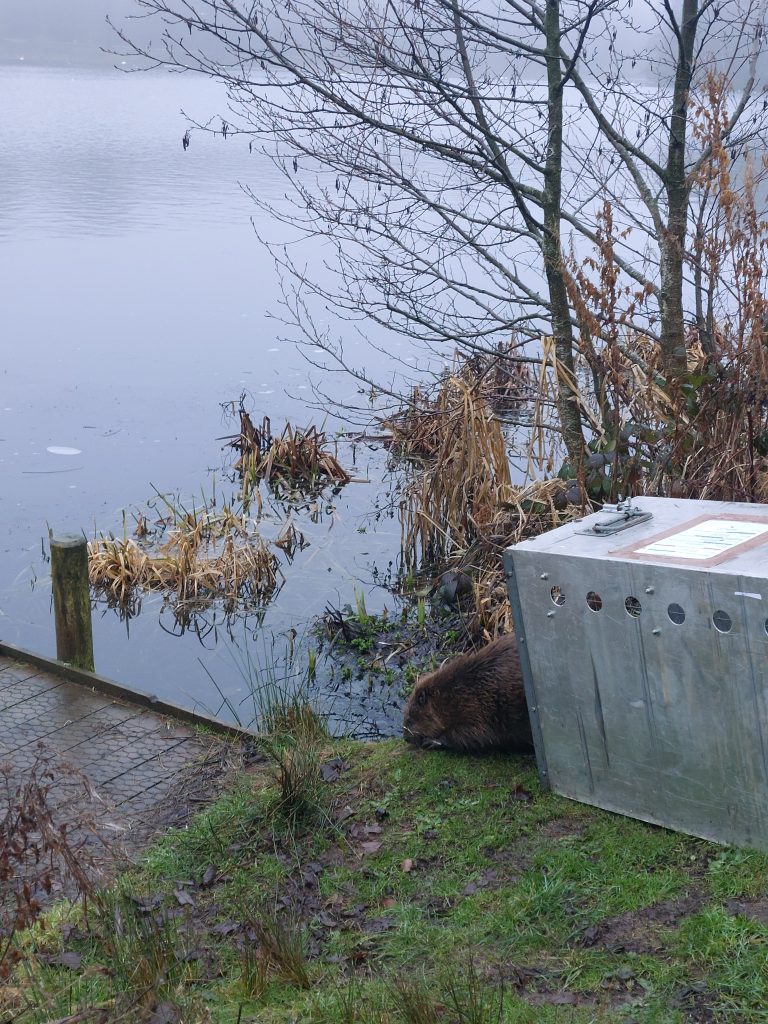
The physical survey process is carried out quickly. Beavers are transferred into a hessian sack to keep sharp teeth out of harm’s way, whilst an examination is done at the other end to identify the animal’s gender. They are weighed and microchipped to enable their details to be recorded onto the national stud record for future pairings, and given a visual health check. We also take photos for distinguishing features to help our team with visual monitoring on future safaris, prior to being released back onto the lake to rejoin the family group. This first individual was confirmed as male, weighing 16 kg (so one of the 2024 kits). He was microchipped and released promptly back onto the lake.
On 5 December, two traps were visited, both by young males. One was slightly larger at 18 kg (2023 kit), the other 16.2 kg (2024). We had been observing a pair of different aged beavers interacting with play fighting and feeding in the same area and now know that these are brothers.
Between 14 – 15 January, we captured three more individuals, all confirmed as females, including our primary target, our original daughter from the 2023 translocation, now a hefty 18 kg and of breeding age. The Beaver Trust selected her for translocation. She was safely translocated to a licensed enclosure this spring at an undisclosed location to start the next step in her life and, hopefully, start a family of her own. We hope to share updates on her progress in the future.
The other two females were very exciting to see at close quarters. We had observed our black 2024 kit and could now confirm she was female. However, the following evening’s trapping activity held a big surprise for our team, we discovered that our black-coloured kit born in 2024 was not alone. The remaining two females captured this winter were both black in colour. As they had been exploring the lake with their siblings rather than together, we hadn’t realised there were two with this distinctive colour in the family. Of course, the coat colour does not show up on the infrared night vision cameras we use to monitor feeding activity. Like our melanistic fallow deer, which have a darker coat pigment, Eurasian beavers can also carry this genetic variation, producing very dark hair which, when wet, appears black. We cannot wait to see these girls this summer as they venture around the lake.
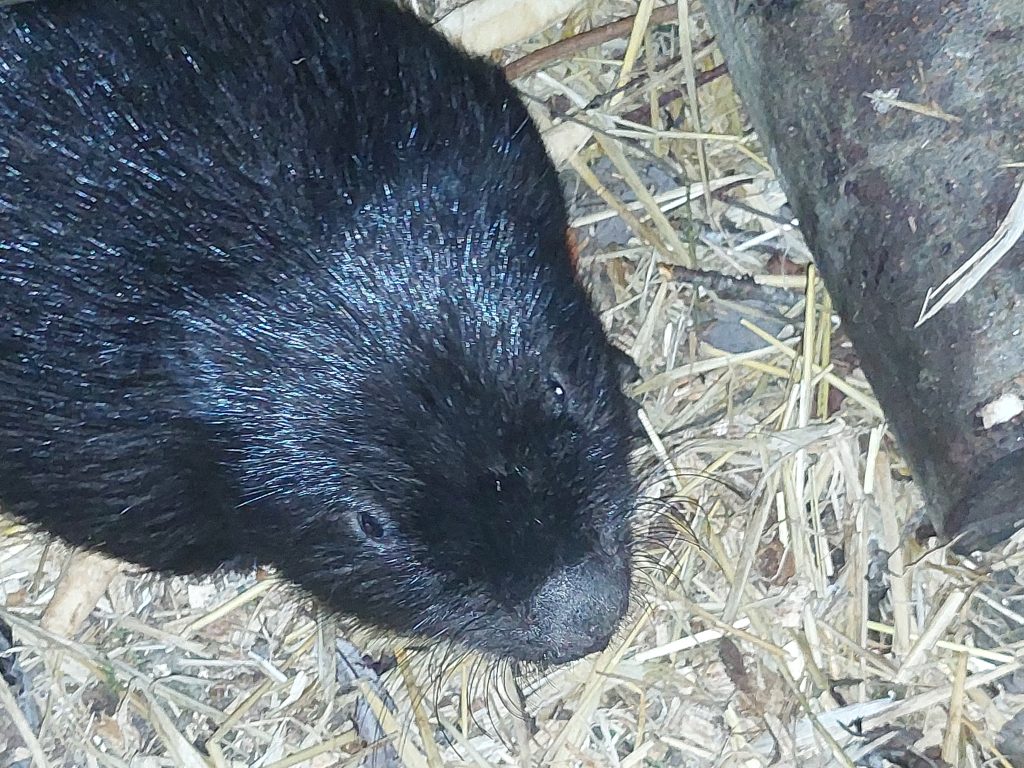
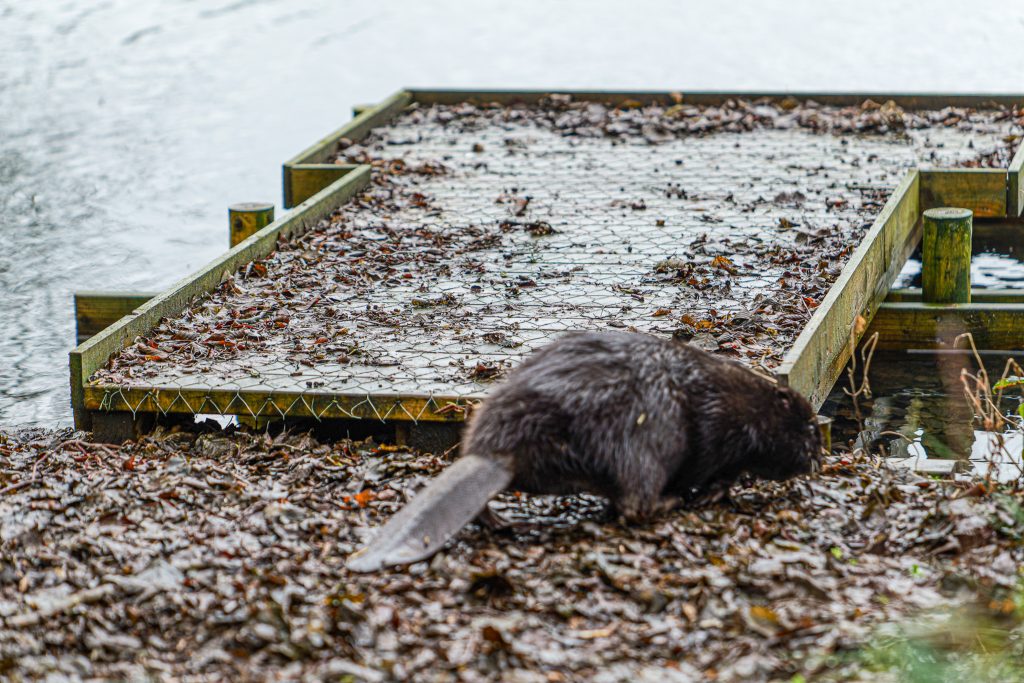
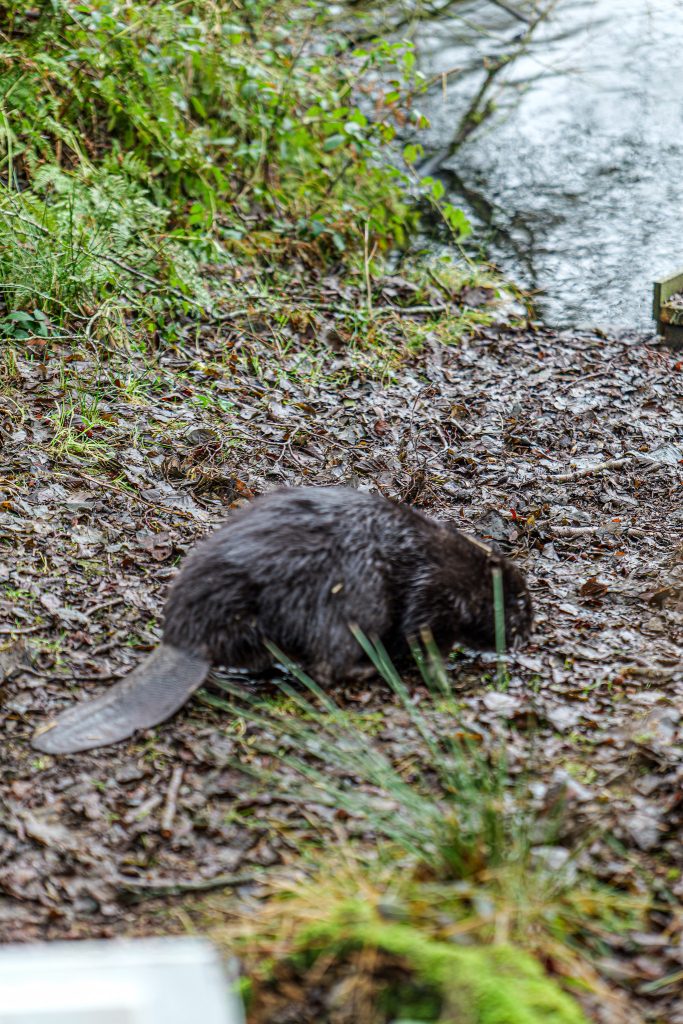
As these two dark kits are younger, smaller and currently not of breeding age, they will remain at Trentham for 2026, giving visitors the opportunity to see them. The dark beavers may potentially only be at Trentham this spring and summer before moving on to pastures new, so if you fancy trying to spot these rare and beautiful animals, then book onto one of our amazing beaver safaris.